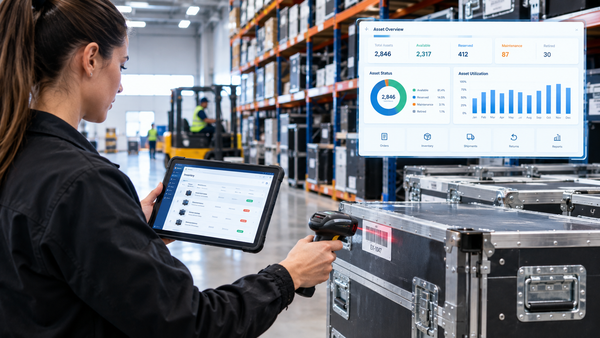
From Chaos to Control: Managing Exhibit Assets Across Your Entire Event Portfolio

Trade shows and live events deliver some of the highest-quality brand engagement in the brand marketing mix. But for exhibit companies and event program managers, the real work happens long before the doors open, coordinating displays, graphics, demo units, furniture, signage, AV equipment, and promotional materials moving between cities, venues, warehouses and client teams.
Without a centralized system, that coordination breaks down fast.
The symptoms are familiar: inventory that can't be located, shipments that miss deadlines, brand standards that vary from booth to booth, redundant purchases, and budgets that silently balloon. For organizations and exhibit companies running large event portfolios, these aren't isolated incidents, they're systemic risks.
The solution is a centralized exhibit asset management software. And for event programs managing 10, 50, or 100+ shows a year, it's not optional, it's operational infrastructure.
Why Event Portfolios Become Difficult to Manage
Scaling an events program introduces complexity that manual processes simply can't absorb. Multiple regions, overlapping show schedules, different warehouses, higher volume of inventory and cross-functional teams create silos that make visibility difficult to capture with manual and fragmented processes.
Most organizations and exhibit companies start with spreadsheets and email. That approach works at low volume. As the event portfolio grows, it stops working, not because the team isn't capable, but because the manual processes weren't built for this level of complexity and scale.
What Exhibit Asset Management Software Actually Does
Exhibit asset management software is a centralized platform built specifically to catalogue, track, allocate, and optimize physical event assets across multiple shows and regions. Unlike generic inventory tools, it's designed for the full lifecycle of exhibit assets and the unique complexity of portfolio-level event programs.
Core capabilities include:
- Trade show asset tracking: Real-time location and status visibility across your entire inventory
- Logistics coordination: Integrated shipping calendars, workflows, and delivery tracking
- Asset lifecycle management: Purchase records, maintenance scheduling, depreciation tracking, and retirement planning
- Budget visibility: Event-level and portfolio-level cost reporting with utilization-based forecasting
- Performance analytics: Utilization rates, cost-per-use analysis and cross-event ROI measurement
The shift from tracking assets event-by-event to managing them portfolio-wide is where the real operational gains happen.
Integrating with Event Management Software
Exhibit asset management software handles the physical side, inventory, ordering, logistics, and asset performance. Event management software handles the planning side, registration, timelines, vendor coordination, and execution workflows.
When these systems are integrated, they create a single source of truth for your entire events operation.
That integration enables:
- Real-time alignment between event schedules and asset availability
- Automated logistics workflows triggered by event timelines
- Cross-event resource allocation without manual reconciliation
- Consolidated reporting that connects planning data with execution outcomes
For exhibit companies managing client programs, this integration also means stronger collaboration with client-side teams, reducing miscommunication and last-minute surprises.

The Before and After
|
Without
Centralized Software |
With
Centralized Software |
|
Spreadsheets
across departments |
Real-time
dashboards |
|
No
visibility into asset location |
Full
inventory transparency |
|
Duplicate
purchases |
Optimized
asset allocation |
|
Reactive
shipping decisions |
Proactive
logistics planning |
|
Inconsistent
brand execution |
Standardized
displays across regions |
|
Rising
costs without clear cause |
Measurable
ROI and forecasting |
This isn't an incremental improvement, it's a structural shift in how exhibit companies, event programs and event program managers operate.
What Portfolio-Level Control Looks Like in Practice
Consider a global technology company running 70+ trade shows annually across North America, Europe, and Asia. Regional teams were managing assets in separate spreadsheets. Assets were duplicated across markets, shipping errors were common, and brand consistency was inconsistent across booths. Costs were increasing year-over-year without a clear explanation.
After implementing centralized exhibit asset management software:
- Duplicate purchases dropped by 28%
- Shipping costs decreased through improved forecasting and proactive planning
- Brand consistency improved across all regions
- Executive reporting tied asset costs directly to event performance
Within a year, the events program moved from reactive coordination to strategic portfolio management.
Key Benefits for Exhibit Companies and Event Program Managers
Higher asset utilization. Idle inventory gets redeployed instead of sitting in a warehouse. Utilization rates improve across regions without adding headcount.
Less redundancy and waste. When event teams can see what exists across the portfolio, they stop buying duplicates. Unnecessary shipping expenses get eliminated before they happen.
Consistent brand execution. Standardized graphics, booth configurations, giveaways and display specs ensure your clients' brands look right everywhere, not just at flagship shows.
Scalability without proportional overhead. Growing the events program no longer means growing the operations team at the same rate. The exhibit asset management software absorbs the complexity.
Reporting that means something. Leadership gets dashboards and reporting that connect asset costs to event outcomes, the kind of data that supports budget conversations and long-term planning.

Frequently Asked Questions
How is exhibit asset management software different from event management software? Event management software manages planning, registration, and execution workflows. Exhibit asset management software specifically handles physical inventory, logistics, and asset performance across your portfolio. They're complementary systems that deliver the most value when integrated.
Is this only for large enterprises? It's particularly valuable for organizations and exhibit companies running complex, multi-event portfolios. But exhibit companies managing assets across multiple client programs can see the same benefits, centralized visibility, better utilization, and more accurate cost reporting.
Can it improve event ROI? Directly. Higher asset utilization, fewer duplicate purchases, reduced shipping costs, and performance analytics all connect event asset spend to measurable outcomes.
What does integration with event management software require? Most modern exhibit asset management platforms support API integrations or native connections with common event management tools. Your software vendor should be able to walk through specific integration requirements based on your current stack.
Moving from Reactive to Strategic
For exhibit companies and event program managers, the goal isn't just keeping track of assets, it's running a events program that's efficient, consistent and defensible at the executive level.
Centralized exhibit asset management software is the infrastructure that makes that possible. It replaces spreadsheets and email chains with real-time data, replaces reactive decisions with proactive planning, and replaces scattered reporting with consolidated insight.
If your event portfolio is growing and the complexity is growing with it, now is the right time to evaluate a centralized asset management software solution. Schedule a demo or start with a conversation about consolidating and scaling your event operations and events program.