5 Operational Practices Behind Every Top Exhibit Company

Exhibit companies vary widely in operational performance. Some grow steadily, retain clients year after year and consistently deliver seamless show experiences. Others work equally hard but face recurring challenges such as double-bookings, last-minute rentals and reactive asset management, all which can affect margins, client confidence and client experience.
This difference is rarely about talent or effort. It typically comes down to the operational practices that leading exhibit companies build into their daily workflows. These operational practices aren't complex, but they are consistent and systematic. When supported by the right platform, they create a meaningful and durable competitive advantage.
Here are five practices that distinguish top-performing exhibit operations and what it takes to build them into your own.
Practice 1: Proactive Asset Management, Not Reactive Fixes
Top exhibit companies rarely discover damaged rental assets or booth panels at the venue. Instead, damaged or lost assets are identified immediately upon return to the warehouse through their asset management software (EAM) because their exhibit asset management software automatically flags condition issues after every return. When an event or exhibit asset comes back from a show, it's scanned, inspected, graded and either cleared for the next deployment or queued for service. And when exhibit assets are not returned and require investigation or replacement it happens immediately. The whole process is captured and logged permanently against the asset's record in the asset management software.
This is what separates proactive event and exhibit asset management from reactive response. Reactive operations wait for things to break. Proactive ones run maintenance on a schedule, catch small issues before they become expensive ones, and never send a client's assets to the show floor in a condition that reflects poorly on their brand.
The financial ROI is significant. Exhibit and event assets managed proactively last 30–50% longer than those managed reactively. Across a fleet of 30 to 40 assets, that difference in lifespan represents tens of thousands of dollars in avoided replacement costs annually, making event and exhibit asset management one of the highest-return investments available. For exhibit companies competing on service quality and margin, exhibit asset management done well is one of the highest return operational investments available.

Practice 2: They Replace Email Threads With a Client Portal
Exhibit companies understand that the client experience of their service is as important as the quality of the service itself. That's why the best operations have stopped managing client orders through email chains and started giving every client a branded self-serve portal where they can browse their asset library, check real-time availability, place orders and track fulfillment on their own schedule, anytime.
This is one of the most impactful exhibit company best practices in exhibit asset management and event asset management (EAM) in terms of both retention and efficiency. Research shows that 70% of B2B clients now expect a self-service application from the organizations they work with. An exhibit company that still relies on email ordering is delivering an experience that's increasingly out of step with client expectations and making itself vulnerable to a competitor who offers something better.
The operational efficiency gains are equally significant. Event Express clients report 80%+ reductions in account manager time spent on order intake and status communication after deploying branded portals. That time is reinvested into higher-value work, building client relationships that grow the business.
Practice 3: They Run Real-Time Inventory Across Every Client and Location
Double bookings are far less common at exhibit companies running real-time inventory. They tend to occur when account managers rely on separate spreadsheets that don't reflect each other's updates. Leading operations have addressed this not through tighter discipline, but through structural prevention: a connected event asset management (EAM) platform where availability updates the moment any booking is made, across all clients, accounts, and warehouse locations simultaneously.
This is event asset management (EAM) at its core. When the system enforces availability rather than relying on individual vigilance, double bookings become far less likely rather than simply dependent on staff attentiveness. For exhibit companies managing 20 or more active client accounts, this kind of structural prevention isn't a luxury, it's a practical requirement for operating at scale with consistency and confidence.


Practice 4: They Make Capital Decisions With Data, Not Instinct
One of the most financially significant exhibit company best practices is how leading operations handle the repair-vs-replace decision. Sometimes exhibit companies make this call by feel: an asset looks worn, so it gets replaced at full cost or a repair gets deferred because nobody has a clear picture of how much has already been spent maintaining it or how often it is being used.
Top-performing exhibit companies approach this decision with a complete per-asset cost history: total maintenance spend, deployment count, current condition grade, and client attribution, all accessible in seconds from an asset management software. When the data shows that an asset has been deployed 55 times, required three significant repairs in 18 months and is ordered often, the replacement decision is straightforward. When the data shows a different asset has 15 deployments and one minor repair, the case for repair is equally clear.
This is where event and exhibit asset management is a genuine financial advantage. Evidence-based decisions consistently outperform instinct-based ones and the data needed to make them is only available when lifecycle tracking runs systematically, per asset, over time. Event Express builds that record automatically.
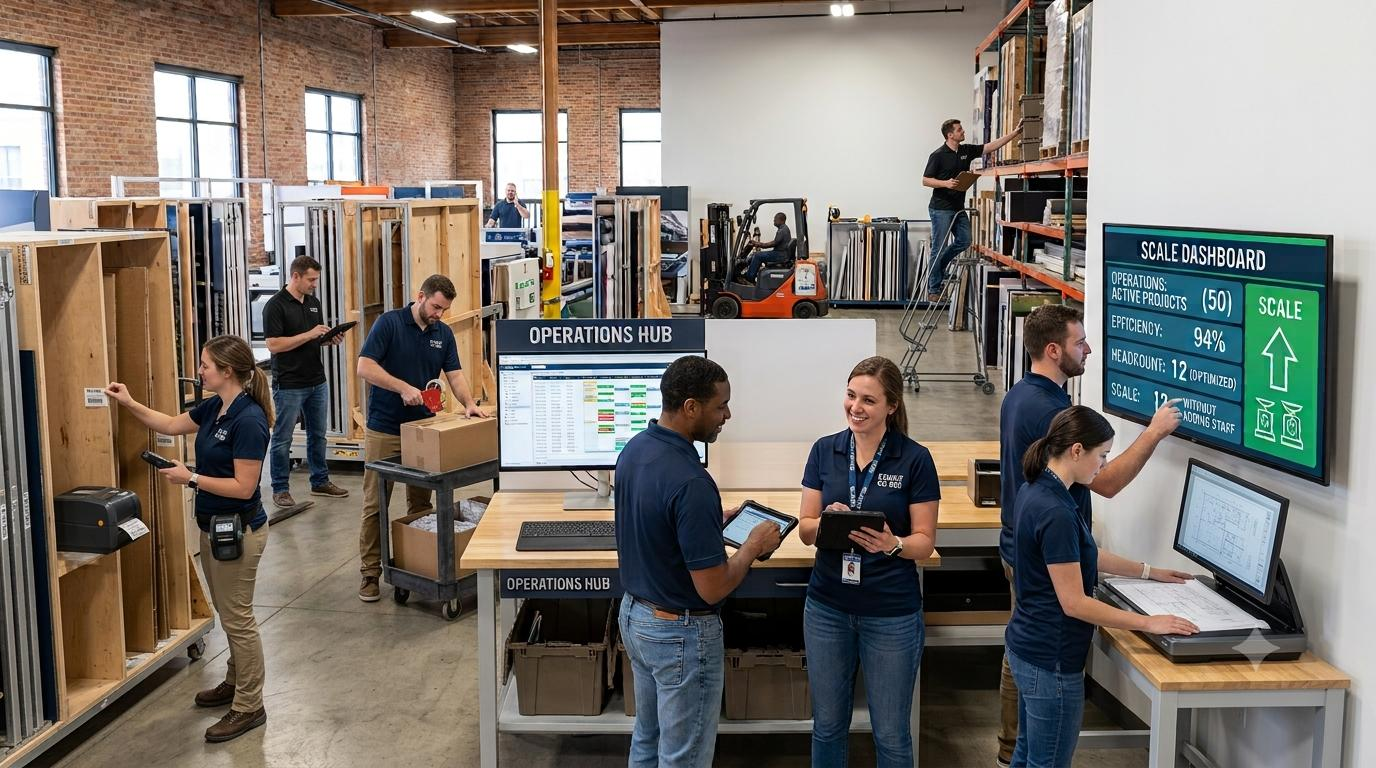
Practice 5: They've Built Operations That Scale Without Adding Headcount
The top exhibit companies in the industry aren't necessarily the ones with the largest teams. They're the ones that have built enough operational leverage into their systems to scale their client portfolio without growing their team. When clients self-serve through branded portals, when orders flow automatically into the fulfillment dashboard and when exhibit asset management is handled by the platform rather than individual effort, the same team can serve 60 clients about as efficiently as it once served 20.
This is the compound effect of event asset management (EAM) and exhibit company best practices built on a connected platform. Each individual practice like proactive maintenance, self-serve portals, real-time inventory and lifecycle tracking creates efficiency on its own. Together, they create the operational leverage that helps exhibit companies scale confidently and provide their clients with a branded experience.
How Event Express Powers All Five Practices
Event Express is purpose-built event asset management (EAM) software designed specifically for exhibit companies and high-volume event organizations. Every practice described in this article isn't a future roadmap item or a complex configuration project, it's a built-in capability, ready to use today.
See how Event Express can help your team build these practices into your operations.
✔ Automated post-return exhibit asset management inspections and maintenance queues > Practice 1
✔ Branded self-serve client portals, same-day provisioning > Practice 2
✔ Real-time multi-client, multi-location event asset management (EAM) inventory > Practice 3
✔ Full per-asset exhibit asset management lifecycle history and cost reporting > Practice 4
✔ Scalable event asset management (EAM) architecture that grows without adding headcount > Practice 5
Teams report an average 37% reduction in operational costs after switching. Implementation and deployment can take less than two weeks. The five exhibit company best practices of top performing exhibit companies are available to any operation willing to invest in the right asset management software.
Book a demo with Event Express today!